
Crafty Blox World
Tappy GameCasual
3.20.00 Reviews
- Version
- 1.0.12
- Installs
- 1.00M
- Age Rating
- Everyone
Screenshots
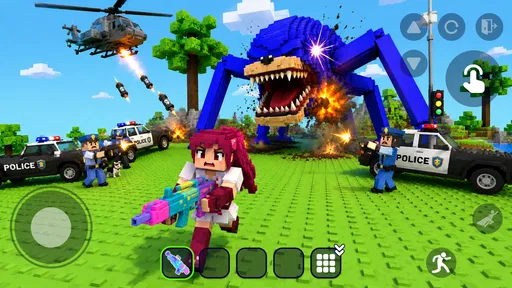
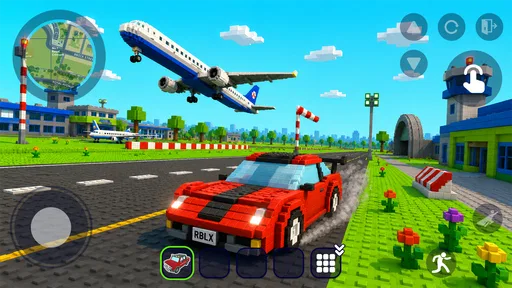
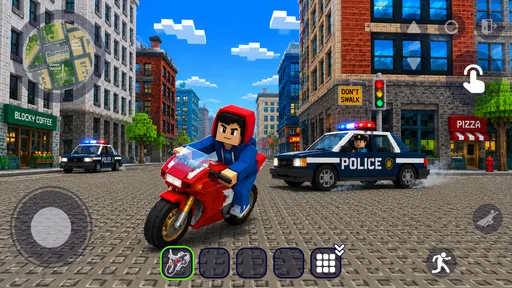
Our Review of Crafty Blox World
 Analysis by Appyee
Crafty Blox World is a casual survival game from Tappy Game that puts its main appeal in the simple loop of making things, building a place to use them, and staying alive in a block-shaped environment. I found that this combination gives the game a more active feel than a basic building toy, while keeping the controls and goals approachable for players who do not want a complicated role-playing system.
The important thing to understand is that crafting is not just decoration here. It connects the different parts of the experience. What I gather or create affects where I can safely spend time, how prepared I feel before taking risks, and whether a short session turns into a longer attempt to improve my position. That relationship between making and surviving is the capability that makes the game worth considering.
It is free to play and aimed at Everyone, so it is easy to try without committing money at the start. The game has passed one million installs, although its average rating sits at 3.2 from roughly 500 ratings. That combination tells me there is clear curiosity around the concept, but also that players should approach it with realistic expectations rather than assuming it will match a polished premium sandbox.
Building is more useful when survival gives it a purpose
I’ll focus on why survival gives construction a practical role, then turn to the choices that make a small building session more purposeful. In my experience, deciding what a structure needs to help me do next is more useful than chasing size or decoration, especially when I may soon need to leave it and face the world again.
Why the crafting-and-building loop stands out
Many casual building games let me place objects and admire the result, but the activity can become directionless once the novelty wears off. Crafty Blox World has a stronger reason to keep moving because the world is presented as a place where I need to build and fight for survival. Even when I am playing casually, my decisions feel connected: gathering is preparation, crafting is an investment, and construction is part of creating a safer or more practical position.
I like this structure because it gives small actions a sense of consequence. A block or item is not only something to collect for visual progress. It can represent a step toward a better base, a more comfortable route through the world, or greater confidence before facing danger. The game does not need a complex story to make those choices meaningful; the loop itself supplies the motivation.
The blocky presentation also helps keep the idea readable. I can quickly understand the difference between exploring, collecting, building, and fighting without needing a dense interface. For younger players and anyone who prefers visual clarity, that is a genuine advantage. The style makes the game feel friendly even when the survival element introduces pressure.
What I would focus on during a first session
My advice is not to rush into building an impressive structure immediately. I would first learn how the world behaves, identify a convenient area, and pay attention to which materials are easiest to obtain. A small, useful setup is more valuable than a large project that leaves me exposed or forces constant backtracking.
This is one of the less obvious strengths of the design: the game encourages me to think about placement as part of survival rather than treating construction as a separate creative mode. A compact shelter or work area can reduce wasted movement and make a short play session feel productive. Even if the final result looks plain, it can support the next stage of exploration.
I also found that the best progress comes from setting a narrow goal before starting. Instead of wandering without direction, I might decide to collect enough material for one improvement, explore one nearby area, or prepare for one encounter. That approach suits the casual category particularly well because it turns a potentially open-ended world into manageable ten-minute objectives.
How the capability works in practice
The basic rhythm is easy to understand: explore the blocky surroundings, gather what is useful, craft or build with it, and then use that preparation while dealing with threats. The appeal comes from repeating this cycle with slightly better decisions. I am not simply tapping through a checklist; I am deciding whether the next action should improve my position or expose me to a possible problem.
That choice creates a useful tension. Staying in one safe area may let me organize my resources, but it can also make the session feel slow. Moving farther may offer a better opportunity, yet it increases the chance that I will need to fight or return with fewer supplies. I enjoy this kind of trade-off because it gives the game a little more thought than a purely decorative builder.
The combat side matters because it prevents the building system from becoming completely passive. I cannot treat every location as a peaceful workshop. When fighting becomes part of the trip, preparation has a practical purpose. I am more likely to think ahead about what I am carrying, where I am going, and whether the reward is worth the risk.
One useful workflow is to separate gathering trips from construction sessions. I prefer collecting several useful materials first, returning to a chosen area, and then building with a clear plan. This reduces the temptation to stop every few seconds and place something without knowing how it fits the larger setup. It also makes the game feel less scattered on a phone screen.
Another tip is to treat the first structure as a tool rather than a finished home. I would place only what helps me organize the next objective, then expand after I understand how much space and protection I actually need. This avoids a common sandbox mistake: spending most of the session making something attractive before discovering that it is inconvenient to use.
A realistic everyday scenario
Imagine having a short break after work or school. I would open the game with one simple intention: gather enough material to improve a small base. I could explore nearby, collect resources, return before the trip becomes too risky, and spend the rest of the session crafting or arranging the area. If I have more time, I can push farther and accept a fight; if I need to stop, the session still has a clear result.
That flexibility is where the game works best for me. It does not require every session to become a major expedition. A short visit can still produce a useful change, while a longer session lets me combine exploration, construction, and combat. The same loop adapts to different amounts of free time without losing its identity.
It is also a reasonable choice for playing alongside a younger family member who enjoys blocks and simple goals. The Everyone age rating supports that broad accessibility, but I would still pay attention to how the individual player handles the survival and fighting elements. The presentation is approachable, yet the need to manage risk may be less suitable for someone who wants a completely calm creative experience.
Where the trade-offs become noticeable
The biggest limitation is that the survival structure may not satisfy players who want a deep sandbox with highly detailed systems. Crafty Blox World is designed as a casual game, and I can feel that in the way the experience stays focused on an accessible loop. Players looking for extensive automation, advanced building engineering, or a large role-playing progression system may find the design too light.
The average rating of 3.2 is worth considering before downloading. It does not automatically mean the game is poor, but it does suggest that the experience will not appeal equally to everyone. I would recommend trying it with the understanding that its charm depends on enjoying repeated gathering, construction, and survival decisions rather than expecting a fully developed blockbuster sandbox.
The free entry point is convenient, but in-app purchases range from about two dollars to thirty dollars per item. That makes it important to be deliberate around optional spending, especially when the game is accessible to younger players. I would begin without buying anything, learn whether the core loop holds my attention, and only then decide whether an optional purchase adds enough value for my own habits.
Another trade-off is the balance between creative freedom and pressure. The survival element gives buildings a reason to exist, but it can also interrupt a player who only wants to design. Conversely, someone who mainly wants action may find gathering and construction slower than expected. The game sits between those preferences, which is its identity but also the reason it will not be perfect for every casual player.
Device compatibility is relatively broad because the game supports Android 7.0 and later. That is helpful if I am using an older Android phone, although compatibility alone does not tell me how smoothly every device will perform. I would keep expectations sensible on less powerful hardware and avoid judging the entire game from a single short session if loading or controls initially feel unfamiliar.
How it compares with familiar alternatives
Compared with a pure casual puzzle game, Crafty Blox World asks more of me. I need to remember what I am trying to build, decide when to explore, and react to danger. That makes it a better choice when I want a relaxed game with some planning, but a worse choice when I only have a few minutes for a predictable, interruption-free activity.
Compared with a dedicated creative block-building game, it gives construction more urgency through survival and fighting. The benefit is stronger motivation; the cost is less freedom to ignore the world around me. If my priority is designing elaborate structures without pressure, a conventional creative builder would probably suit me better. If I want my building decisions to matter immediately, this game has the more interesting angle.
Compared with a combat-first survival game, its casual presentation makes the entry point gentler. I would choose it when I want the ingredients of survival without committing to an intimidating, highly technical experience. The compromise is that experienced survival fans may want deeper systems, more demanding progression, or greater complexity than this format is intended to provide.
Who gains the most from the design
The best audience is someone who enjoys visible progress and likes switching between activities. If I enjoy collecting a little, building a little, and then testing my preparation in a dangerous situation, the loop has enough variety to remain engaging. It is also a good fit for players who prefer goals they can create for themselves instead of following a long chain of instructions.
Newcomers to survival games may appreciate the blocky style and approachable premise. I would still recommend starting with small objectives rather than trying to master everything at once. Learning how to make a useful base, when to return, and how much risk to accept will probably matter more than chasing an ambitious design from the beginning.
On the other hand, I would skip it if I want a strictly peaceful building app, a serious competitive combat game, or a highly elaborate survival simulation. The game’s middle ground is appealing only if that mixture sounds enjoyable. Someone who dislikes resource gathering may spend too much time working through the part they find tedious, while someone who dislikes fighting may feel that construction is constantly being interrupted.
Version, access, and my practical recommendation
The current version is 1.0.12, and the developer is Tappy Game. Since the game is free, my practical recommendation is to install it as a low-risk experiment rather than treating it as an automatic long-term favorite. Give the core loop enough time to show whether the connection between crafting and survival works for you, but do not feel pressured to purchase anything during that test.
I would also decide in advance what kind of session I want. For a quick visit, choose one building improvement. For a longer session, plan a gathering route and leave room for exploration or combat. This small habit makes the game feel more purposeful and helps reveal its strongest quality: the way a simple construction decision can change how I approach the next risk.
My final view is positive but measured. Crafty Blox World is at its best when building is treated as preparation, not just decoration. That gives its casual format a useful layer of strategy without making the experience difficult to enter. The free download, Everyone rating, and broad Android support make trying it straightforward, while the middling rating and optional purchases are good reasons to keep expectations and spending under control.
I would recommend it to a friend who likes blocky worlds but wants more purpose than simply placing objects. I would not recommend it to someone seeking a fully peaceful creator or a deep survival simulation. For the right player, Crafty Blox World offers a satisfying cycle of gathering, making, building, and defending, with enough flexibility for both short everyday sessions and longer attempts to improve a personal corner of its world.
Verdict
Strengths of Crafty Blox World
- Simple controls make building and exploring easy for younger players.
- Creative tools encourage imagination through custom structures and worlds.
- Colorful visuals give the game a friendly, approachable look.
- Exploration offers casual entertainment without requiring advanced gaming skills.
- Playable sessions can be short, making it suitable for quick breaks.
Limitations of Crafty Blox World
- Some features may feel limited compared with larger sandbox games.
- Repetitive tasks can reduce long-term interest for experienced players.
- Performance may vary on older or less powerful mobile devices.
- In-app purchases could affect access to certain items or content.
- The interface may take time to understand for first-time players.
Other Releases by Tappy Game
View All


Similar Picks in This Category
View All
My Talking Angela
Outfit7 Limited4.2

My Talking Tom
Outfit7 Limited4.3

Pou
Zakeh4.2

My Talking Tom 2: Pet Game
Outfit7 Limited4.3

Candy Crush Saga
King4.6

Bridge Race
Supersonic Studios LTD4.1
Frequently Asked Questions
What is Crafty Blox World?
Crafty Blox World is a block-building sandbox game for mobile devices that lets you explore colorful environments, gather resources, construct buildings, and create your own imaginative worlds. It is aimed at players who enjoy Minecraft-style creativity, casual exploration, and character customization. The game combines open-ended building with adventure elements, so it can appeal to both younger players and anyone looking for a relaxed creative experience.
Is Crafty Blox World free to download and play?
Crafty Blox World can generally be downloaded for free, but the exact availability and included features may vary depending on whether you use Android or iOS. Like many mobile sandbox games, it may include optional in-app purchases, advertisements, or premium items such as cosmetic content, resources, or convenience features. Before downloading, check the store listing carefully and review the purchase settings if children will be playing.
Can I play Crafty Blox World offline?
Some parts of Crafty Blox World may work without a constant internet connection, particularly basic building, exploration, or single-player activities. However, online features, advertisements, updates, account synchronization, multiplayer functions, and certain downloadable content may require internet access. Because offline support can change between versions, it is best to test the game after installation and avoid assuming that every mode will remain available without connectivity.
Does Crafty Blox World support multiplayer or online interaction?
Crafty Blox World may provide online elements that allow players to visit shared spaces, interact with other users, or access community-related content, depending on the current version and platform. Online play can make the building experience more social, but it also means users should pay attention to privacy, chat, and parental-control settings. Parents should review available communication features before allowing younger children to play.
What devices are compatible with Crafty Blox World?
Crafty Blox World is designed for Android and iOS mobile devices, but compatibility depends on the operating-system version, available storage, memory, and graphics performance. Older phones or tablets may experience longer loading times, reduced visual quality, or occasional performance issues. Before installing, compare your device with the minimum requirements shown on the official Google Play or App Store listing, and keep enough free storage for updates.
Play our best games!


